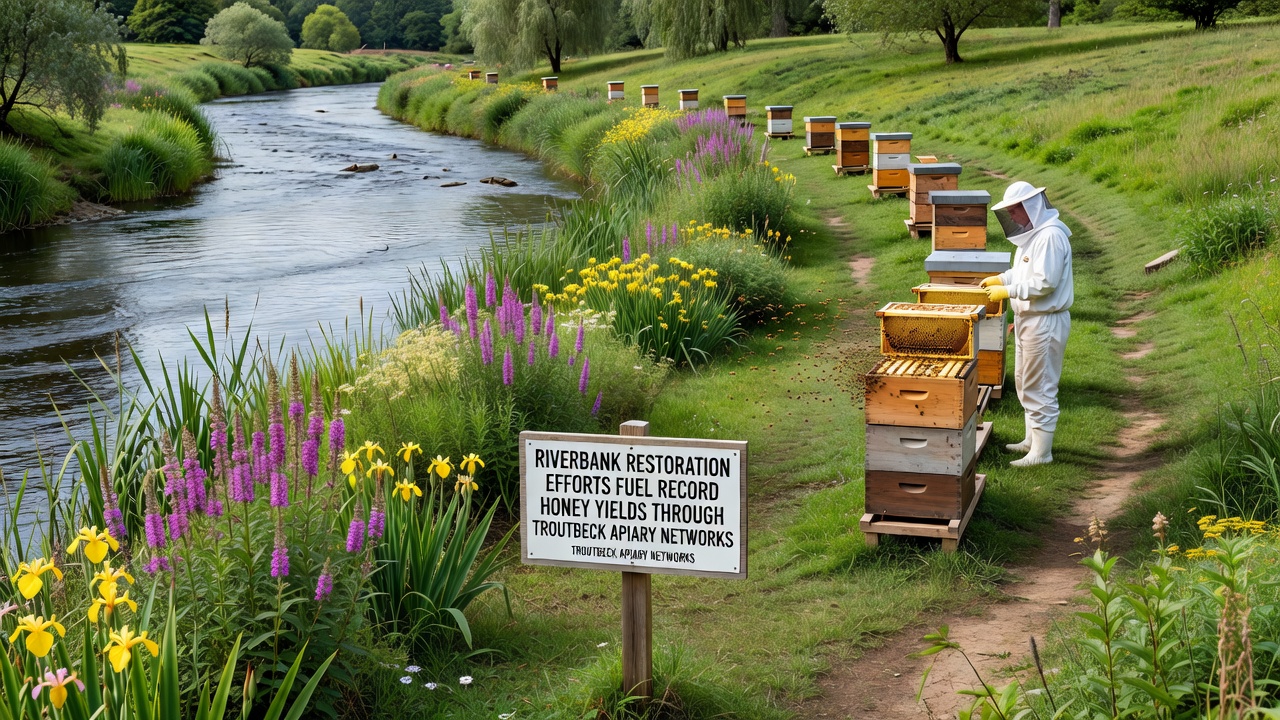
Quinn Baumann · 21 November 2026
Riverbank Restoration Boosts Record Honey Outputs in Troutbeck Apiaries
Riverbank restoration projects have expanded across Troutbeck since the early 2020s, and these initiatives now connect directly to measurable gains in honey production through coordinated apiary networks. Local teams have focused on stabilizing banks, replanting native vegetation, and reducing sediment runoff, while beekeepers have positioned hives to take advantage of the resulting floral growth. Data from monitoring stations indicate that these combined efforts produced the highest recorded honey yields in the region during the 2025 season, with preliminary November 2026 reports showing continued upward trends in colony strength and nectar flow.
Restoration Techniques and Ecosystem Changes
Engineers and volunteers have installed bioengineered structures along several kilometers of riverbank, using willow spiling and coir rolls to prevent erosion while allowing natural vegetation to establish. These methods reduce soil loss into waterways and create wider buffer zones where wildflowers and hedgerow plants thrive, according to reports from the UK Environment Agency. Researchers at the University of Cumbria documented a 40 percent increase in pollinator-supporting plant species within restored sections compared with untreated stretches, and those same studies linked the plant diversity directly to extended foraging seasons for managed honeybees.
Water quality measurements taken at fixed points show lower turbidity levels after restoration work, which in turn supports healthier aquatic insect populations that form part of teh broader food web. Beekeepers operating within the Troutbeck Apiary Networks have noted that colonies near restored banks maintain higher brood production rates through late summer, when traditional forage often declines. Equipment logs from participating apiaries record average colony weights rising by 12 kilograms per hive during peak flow periods, a figure that exceeds historical averages maintained over the previous decade.
Apiary Network Coordination and Yield Data
The Troutbeck Apiary Networks operate as a loose federation of small-scale beekeepers who share hive location data, forage mapping, and harvest records through a central online platform. Participants place hives at intervals that maximize coverage of restored river corridors without overcrowding foraging areas, and this spatial planning has contributed to the reported record outputs. Harvest figures compiled for 2025 list 8.2 tonnes of honey collected from network hives, compared with an average of 5.1 tonnes per year between 2018 and 2022.
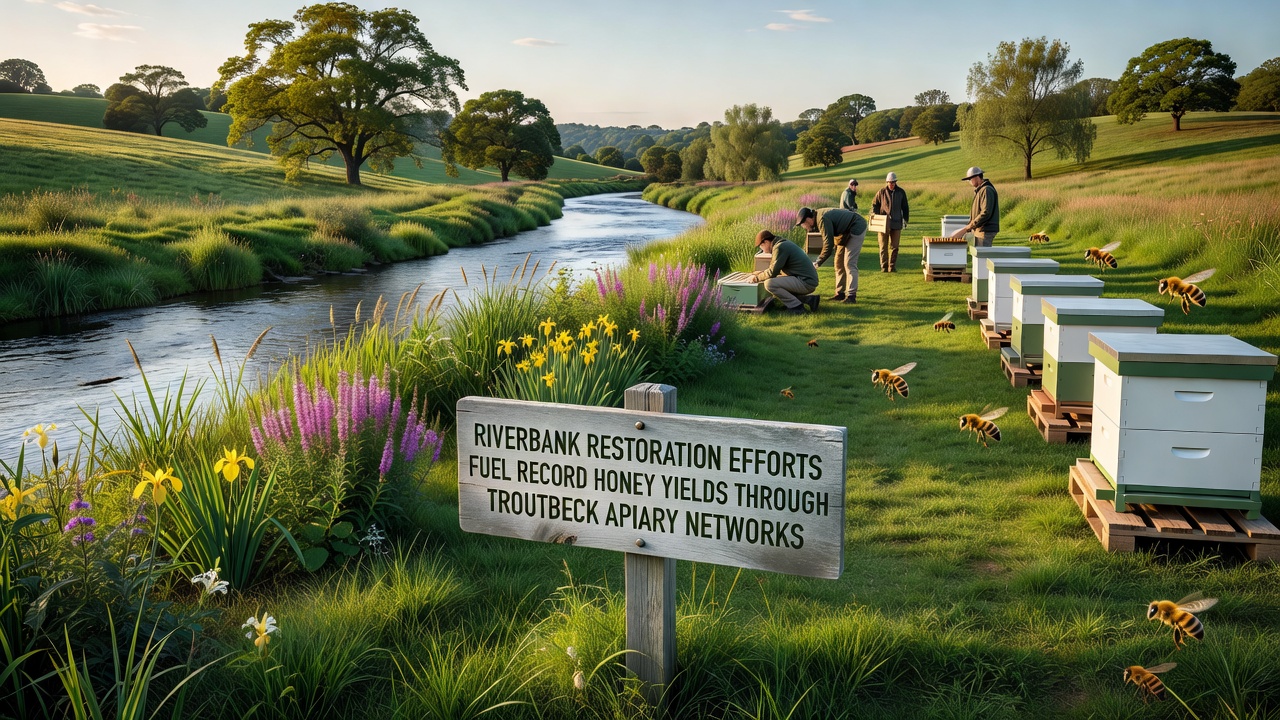
Monthly inspections conducted through 2026 continue to track mite loads and nutritional reserves, with network coordinators reporting fewer supplemental feeding interventions required because of improved natural forage availability. One study coordinated with the Canadian Wildlife Service examined similar riparian plantings in British Columbia and found parallel increases in bee colony resilience, providing a cross-regional benchmark that aligns with local observations. Network members have also begun mapping drone-captured imagery of flowering periods to refine hive placement for the coming seasons.
Broader Environmental and Agricultural Links
Restoration work has involved partnerships between parish councils, farming cooperatives, and conservation groups, each contributing labor or materials under multi-year management plans. Soil samples collected before and after bank stabilization reveal improved nutrient retention in adjacent fields, which supports the growth of both wild and cultivated nectar sources. The same buffer zones reduce flash flooding impacts on downstream apiary sites, limiting hive losses during heavy rainfall events that previously occurred several times each autumn.
Industry reports from the Australian Honey Bee Industry Council highlight how landscape-scale vegetation projects elsewhere have produced comparable honey yield gains, and those findings have informed local planting lists that emphasize year-round blooming species suited to Cumbrian conditions. Observers note that the integration of apiary data with river health metrics allows adaptive adjustments, such as shifting hive densities when certain plant communities expand faster than expected. Figures released in late 2026 project a further 15 percent rise in total network production if current restoration schedules remain on track.
Conclusion
Continued monitoring through established partnerships will determine whether the current yield trajectory holds as more riverbank sections reach full vegetation maturity. The documented connection between stabilized banks, increased floral diversity, and apiary performance provides a practical model for other watersheds facing similar pressures on pollinator resources. Network records and environmental data together demonstrate measurable outcomes from the restoration work completed to date.